

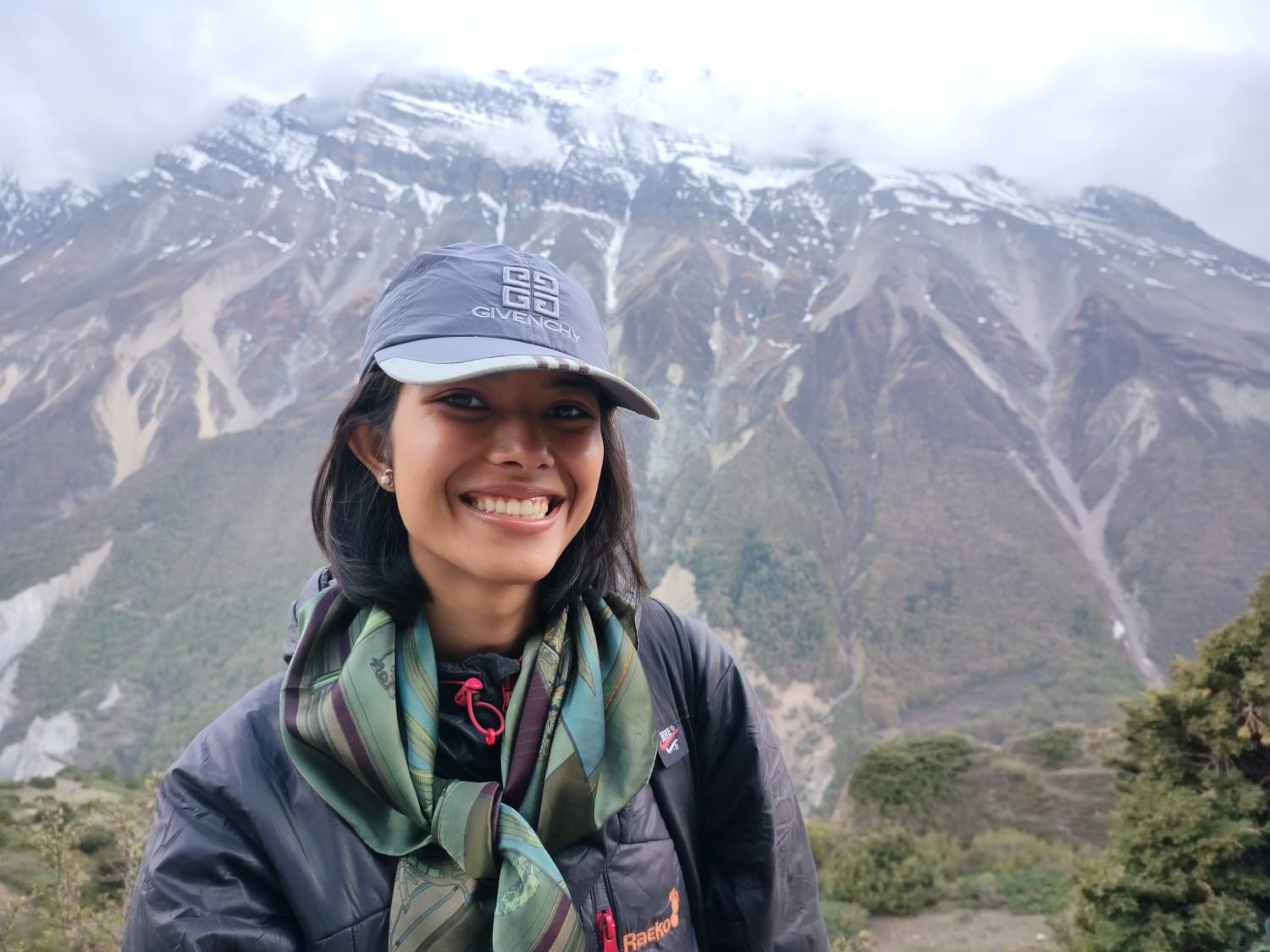

“It’s mostly people with the least contribution to climate change having to bear the heaviest brunt.”
Nepal is widely recognized as one of the world’s most climate-vulnerable nations. Maplecroft’s Climate Change Vulnerability Index ranked Nepal as the fourth-most vulnerable country globally in 2011 (UNICEF, 2017). Yet, the climate change impact in Nepal extends beyond the immediate physical sphere to social and cultural aspects, with the critical impact unfolding in the aftermath, leaving the community vulnerable and displaced.
One thing remains clear that the consequences of climate change are never equivalent for everyone. The extent to which a group or an individual experiences climate impact depends on their access to resources, opportunities, and capacity to withstand shocks created by climate change. The frontline communities in direct exposure to climate change induced risks and hazards primarily face more havoc and chaos than any other groups owing to their limited access to basic resources. Women, poor households, ethnic minorities, marginalized groups, pregnant women, and other vulnerable populations experience the greatest losses and burdens (Ministry of Forests and Environment, 2021).
1. Just how hard do women take hits of climate related shocks?
1.1. Water and unpaid care
The impacts of climate change are intensified for women and girls due to the existence of deeply ingrained gender disparity in our societies.
For centuries, women have existed as the core pillars of our households, who have traditionally borne obligations of ‘’homely duties’’ including cooking, cleaning, and carrying numerous social responsibilities. It has been their responsibility to secure food, water, and fuel. From ensuring the readiness of food and collecting water to suffice household needs to sustaining social engagement, women have always been on the frontier. As recent as 2021, studies reported that women carry the primary responsibility to meet household water requirements and usually spend 30% of their time fetching water and even spend up to 3-4 hours each day to meet the water demand during dry seasons in rural Nepal. The demand for scarce water resources has led to night time irrigation struggles for women that are risking women headed households and increasing gender based violence (ICIMOD, 2021).
Despite their role in sustaining households, much of their works goes unrecognized and unpaid. In Nepal, women bear 85% of daily unpaid care work, accounting for a combined 29 million hours a day which is almost 6 times more than men who account for 5 million hours a day (ILO, 2023). This is another means of perpetuating wide gender based disparity.
1.2. Women’s role in agriculture and resource limitation
In Nepal, one third of households are led in agriculture by women. Yet, it’s challenging for a woman to gain ownership, accessibility to land, resources and information compared to their male counterparts. Research shows a stark difference in land ownership, with 75.8 % of land owned by male and just 24.2% by females (National Statistics Office, 2024).
1.3. Exclusion from decision making
Furthermore, climate change policies often continue to portray women and marginalized groups primarily as vulnerable beneficiaries rather than as key stakeholders and agents of change. This limits their participation in decision-making processes and contributes to inadequate investment in capacity building, leadership development, and human resources needed to strengthen their role in climate adaptation and resilience-building (ICIMOD, 2021).
2. How does climate disaster make the existing situation of gender inequality worse?
2.1. Gender based violence incidences
Climate change induced economic and social loss is intensifying violence on women and girls. Here, the word 'intensifying' implies a sense that women and girls from abusive households are more likely to fall victim under pressure and aftermath of climate change induced impacts like unemployment, poverty, gambling, addiction and others. These may act as a stimulator for domestic abusers. Furthermore, sexual violence may increase under similar scenario. The households that may not have previously experienced violence can become vulnerable to the aftermath of climate related disasters, which may lead girls and women to face greater risks of violence and exploitation.
As indicated by UN Women (2025), without timely action, partner-based violence resulting from impacts of climate change would be seen in every 1 in 10 cases by the end of the century.
Climate shocks have also been associated with increased workloads, forced migration, social tensions, and higher incidences of gender-based violence for women (Ministry of Forests and Environment, 2021). Moreover, the women and girls in rural communities are likely to face the heaviest brunt. The weather extremes leading to flood, drought, wildfires, and heatwaves have increased stress and livelihood insecurity in the family, leading to increased gender based violence (Afifi et al., 2024).
2.2. Child marriage and education

It’s not uncommon in Nepal to encounter cases of child marriage. Child marriage, a form of gender based violence is intensified by the resulting food and water insecurity and poverty triggered by climate change disasters. A girl is far more likely to get pulled out from schools than a boy when a household incurs financial constraint. When there’s less working hands on land or to collect fuels or water, girls are affected more and are likely to miss school.
About 40 percent of the population in Nepal depend on small water sources, and with increasing incidences of drying water streams, it’s time consuming to fetch water and require having to walk longer distances. This affects young girls who are responsible to help their mothers in household chores, and it has contributed to higher school dropout rates among young girls (Martinez, 2025).
2.3. Health impacts
Climate change disasters are more likely to harm women because of an already existing gender disparity that limits their mobility and access to resources and information, and limits their decision making (UN Women, 2025). Climate change impacts run deeper even among women when viewed from an intersectionality lens. From an intersectional perspective, climate change impacts are shaped by a combination of factors, including caste, ethnicity, religion, age, disability, economic status, access to resources, political influence and geographic location, ranging from mountains and hills to the Terai (ICIMOD, UNEP & UN Women, 2021). These factors shape experiences that are far from being ‘uniform’.
Women are more affected by extreme temperatures, increasing risk of poor maternal health, hypertension and heat exhaustion. Such extremities can disrupt healthcare delivery. IPCC (2022) emphasizes that women’s vulnerability to extreme heat, infectious and water borne diseases, air pollution and food-related infections is increased during pregnancy and maternity. Such exposure increases risk of miscarriage, stillbirth, premature birth and low weight birth. Women and girls are likely to face greater food insecurity risk, aiding poor nutrition and health (Afifi et al., 2024).
A study conducted by Ipas Nepal (2024) in Kutiya and Banganga River Basins reveals the vulnerability of climate change on women including disruption of their sexual and reproductive health and rights (SRHR). The women also reported to have experienced an increased workload like clearing flood water in their houses, uprooting weeds and clearing sand from paddy in fields. The increased physical workloads were associated with higher occurrence of miscarriages in the community. Adding to these hardships, women are at risk of facing more domestic, sexual, societal and financial abuse post climate change disasters, leading to overall deterioration of their physical and mental health (Pradhan, 2024).

What are our solutions?
A woman in her household is expected to wake up before other members of her family, ensure the meal is prepared and water is readied, and shoulders responsibility of feeding her husband, children, and in-laws. There’s a burdening expectation from women to carry full time paid jobs and balance out their “homely duties’’ that normalize her to swiftly be an allrounder and achieve balance at work and at home. How vastly unfair it seems that the women and girls have been normalized to act and assist a certain way to cater to the needs and wants of her household.
Are they compensated, respected, and returned the same care? Despite decades long progress, the answer still remains no.
Time becomes scarce for them to even sufficiently cater their own personal needs and gain relaxation. To them, this is a luxury, when it should’ve instead become a state of normalcy. The mental and physical strain they incur is generally unspoken and remains undervalued.
Women are agents of change. When they receive equal access and opportunities, they can take effective decisions that will lead to improved food security, mobilizing resources and greater mobility. Since the impact differs based on gender, climate change policies should address this gap and make it inclusive to women and girls. This will increase participation of women in active decision making. Gender effective climate resilient policies and inclusive governance have been shown over and over to improve social equity (UN Climate Change, 2022).
There’s an urgent need to recognize the economic contribution of unpaid work of women and lift this burden off them, which would serve as a means to achieve gender equality and social justice. It’s crucial to address stereotypes related to gender roles and unequal division of labor to bridge the enormous existing gap between paid and unpaid work (UNDP, 2018).
Taking women’s work for granted and easing with cultural and traditional assumptions even today hinders our society’s progress and keeps us backward. The societal stereotypes have remained unquestioned for long, letting the brunt be felt by women for the longest time period.
Climate change magnifies the already existing gender equalities. Climate resilience should not be limited to protecting communities from environmental hazards, it should encompass broader areas and oversee the socioeconomic barriers of women and girls that increasingly become vulnerable. Building resilience requires recognizing women’s labor, facilitating their access to resources and decision making, implementing regulations to protect them from all forms of violence, and ensuring access to timely health facilities. We most certainly have been progressing towards bridging the gap but we still have a long road ahead.
References:
New Report: Why Climate Change Impacts Women Differently Than Men. (2022, June 10). United Nations Climate Change. Retrieved July 22, 2026, from https://unfccc.int/news/new-report-why-climate-change-impacts-women-differently-than-men
How gender inequality and climate change are interconnected. (2025, April 21). UN Women – Headquarters. Retrieved July 22, 2026, from https://www.unwomen.org/en/articles/explainer/how-gender-inequality-and-climate-change-are-interconnected
ILO-UN Women joint programme on decent employment for women in the care economy concludes with recommendations to address care coverage gaps. (2023, August 22). International Labour Organization. https://www.ilo.org/resource/news/ilo-un-women-joint-programme-decent-employment-women-care-economy-concludes
MoFE. (2021). Vulnerability and Risk Assessment and Identifying Adaptation Options in GESI, Livelihood and Socio-Economic Sector in Nepal. Ministry of Forests and Environment, Government of Nepal. Kathmandu, Nepal.
National Statistics Office. (2024). Nepal Living Standards Survey IV 2022/23: Statistical report https://giwmscdnone.gov.np/media/app/public/36/posts/1719375782_27.pdf
Afifi M, Malkawi M, El-Adawy M. Women’s health and climate change: a threat or an opportunity. East Mediterr Health J. 2024;30(5):330–332. https://doi.org/10.26719/2024.30.5.330.
International Center for Integrated Mountain Development (ICIMOD), United Nations Environment Programme (UNEP), & UN Women. (2021). Summary for policymakers: The state of gender equality and climate change in Nepal. UN Women Regional Office for Asia and the Pacific.
ICIMOD, United Nations Environment Programme & UN Women. (2021). State of gender equality and climate change in Nepal. UN Women. https://asiapacific.unwomen.org/en/digital-library/publications/2021/12/state-of-gender-equality-and-climate-change-in-nepal
Women’s (double) burden. (2018, February 26). UNDP. https://www.undp.org/kosovo/news/womens-double-burden
Pradhan, S. (2024, October 16). Climate change and its silent impact on sexual and reproductive health in Nepal. Ipas. https://www.ipas.org/news/climate-change-and-its-silent-impact-on-sexual-and-reproductive-health-in-nepal/
Martínez, A. R. (2025, May 8). Women standing for water: The story of a teagarden community in Ilam, East Nepal. EURAC Research. https://www.eurac.edu/en/blogs/gender-matters/women-standing-for-water-the-story-of-a-teagarden-community-in-ilam-east-nepal
Emergency. (n.d.-a). UNICEF Nepal. Retrieved July 22, 2026, from https://www.unicef.org/nepal/emergency